
Northern Lights Forecast for Prince Albert

Chase the aurora in Prince Albert’s star-filled skies.
Loading aurora probability...

Substorm

Substorm Phase: Quiet; Aurora Activity Score: 5/100

This feature is experimental. We are actively working to improve the Substorm feature.
Waxing Gibbous 58.1% illuminated
17
Power North (GW) Measures the total energy fueling the aurora in this hemisphere. Higher values mean a stronger, more visible aurora that can be seen closer to the equator (or further from the poles).
0.11
BZ The north-south direction of the sun's magnetic field. A negative (southward) Bz is crucial for connecting with Earth's field and boosting aurora activity.
4.91
BT The overall strength of the sun's magnetic field. A stronger Bt can indicate more energetic solar wind, which can contribute to aurora intensity, especially when Bz is favorable.
503
Wind Speed (km/s) The speed of particles flowing from the sun. Faster solar wind delivers more energy to Earth's magnetic field, increasing aurora potential.
0.1
Density (p/cm³) The concentration of particles in the solar wind. Higher density means more particles impacting Earth's magnetic field, which can intensify auroras.
1.0
KP A global index (0-9) measuring Earth's geomagnetic activity. While historically used, Kp is a less precise indicator for real-time aurora visibility compared to other factors. Higher Kp values *can* suggest stronger disturbances, but it's not the sole or most reliable predictor.
Ideal Conditions for Northern Lights in Prince Albert:

Power: +25 Gw | Bz: -2 | Wind Speed: 400+ | Density: 4+ | Kp: 2.5+

If the data above meets or exceeds the power meets then the aurora borealis should be visible within Prince Albert.

Don’t Miss the Magic!

Stay ahead of the Northern Lights with real-time alerts. Subscribe now to receive a text or call whenever the aurora is active—so you never miss a moment of the show.

Experience the awe-inspiring beauty of the Northern Lights in Prince Albert, Saskatchewan, as the night sky comes alive with vibrant colors. Discover the best times and places to witness this mesmerizing celestial phenomenon in the heart of Canada's prairie province.

Introduction – How to use this data:

Immerse yourself in the captivating allure of the Northern Lights in Regina with the help of our sophisticated tool. Predicting aurora occurrences effortlessly, we transform live satellite data into a streamlined dashboard, eliminating any unnecessary complexity. While deciphering this data might seem intricate, our comprehensive guide demystifies the process.

Elevate your Aurora-chasing experience with our extended forecast feature. Strategically plan your expedition, building excitement for the breathtaking Northern Lights display that can adorn the Regina skies. Additionally, our real-time minute-to-minute forecast ensures an immersive and personalized encounter that will leave a lasting impact.

Where to see the northern lights in Prince Albert?

The enchanting dance of the Northern Lights in Prince Albert can be best witnessed away from the city's bright lights. Seek out locations with unobstructed views of the northern horizon.

Here are some of our favorite places:

  1. Muskoday: Located just outside Prince Albert, Muskoday offers open fields and less light pollution, providing an ideal spot for Northern Lights viewing.
  2. Prince Albert National Park: Head to this national park for a serene natural setting, where clear skies and minimal city lights increase your chances of spotting the auroras.
  3. Waskesiu Lake: Within Prince Albert National Park, Waskesiu Lake provides expansive views of the night sky, making it an excellent location to catch the Northern Lights in all their glory.
  4. Nisbet Provincial Forest: Venture into this forest for a secluded setting that minimizes light interference, allowing for a clearer view of the celestial spectacle.
  5. Little Red River Park: This park on the outskirts of Prince Albert offers open spaces and a serene environment, creating a perfect backdrop for Northern Lights gazing.

Remember to check local Aurora forecasts and current geomagnetic activity to maximize your chances of witnessing this natural wonder in Prince Albert.

When can you see northern lights in Saskatoon?

Typically, from around 11:00 PM after sunset to the early hours of 3 AM, is when the Northern Lights become visible. However, on nights of exceptional intensity, the auroras may make an appearance even earlier, treating viewers to an extraordinary celestial display.

When is the best time of year to see the aurora borealis in Prince Albert?

While the captivating aurora borealis can grace the skies of Prince Albert all year round, the optimal time for viewing is during the late fall, winter, and early spring months. These seasons provide longer periods of darkness, enhancing the chances of witnessing the mesmerizing dance of the Northern Lights in the Prince Albert night sky.

Can you see the northern lights in Prince Albert tonight?

The possibility of observing the northern lights in Prince Albert tonight depends on various factors, including current solar activity and geomagnetic conditions. For the most accurate updates, closely monitor Aurora Admin and track the incoming data. If the specified criteria align, there is a good chance of experiencing the awe-inspiring display of the aurora borealis in the Prince Albert area.

How long do the Northern Lights usually last?

The duration of the Northern Lights, also known as the aurora borealis, can vary. On average, a single display of the Northern Lights may last anywhere from a few minutes to several hours. However, during periods of heightened solar activity and favorable conditions, the auroras can persist for several hours, painting the night sky with an enchanting and mesmerizing spectacle. The exact duration of the auroras depends on factors such as the intensity of the solar storm, atmospheric conditions, and the strength of the aurora display. Keep in mind that while some auroras are brief, others can offer an extended and breathtaking show, adding to the captivating experience of the Prince Albert night sky.

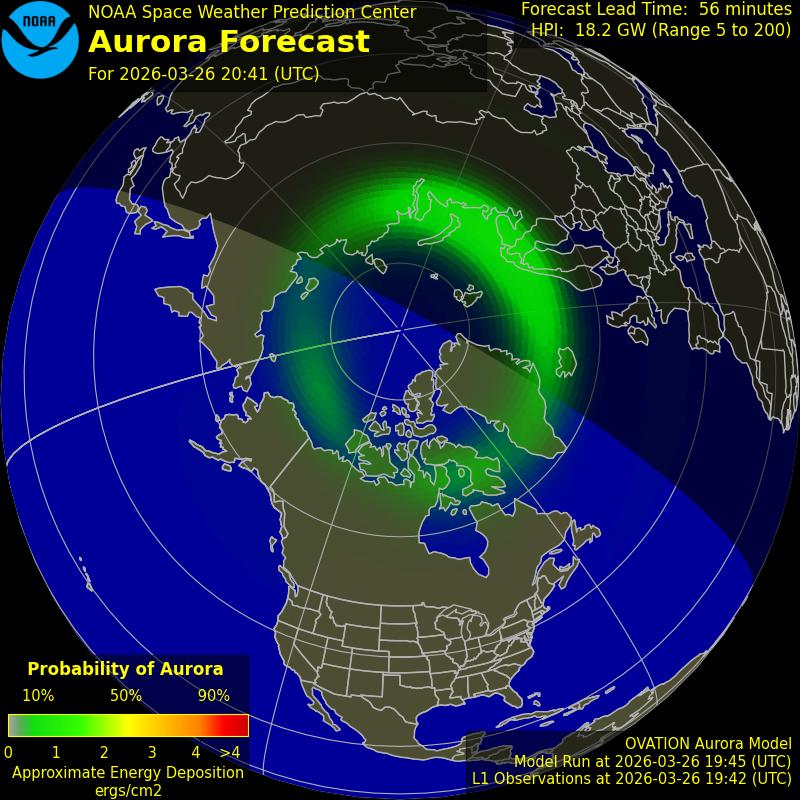
Aurora Oval

Northern Hemisphere

Aurora Oval Northern Hemisphere