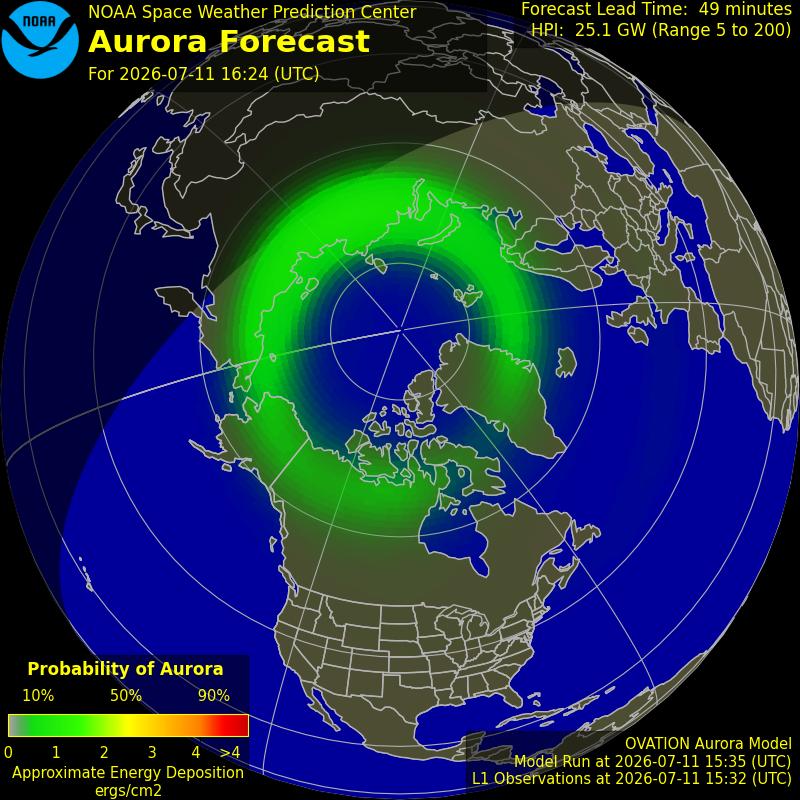
How to Maximize the Data:
For those eager to experience the enchanting Northern Lights in Montreal, our tool proves invaluable in predicting aurora appearances. We curate live satellite data into an easy-to-use dashboard, removing unnecessary clutter. While deciphering the data might initially seem complex, our comprehensive guide simplifies the process.
Elevating Your Aurora-Chasing Experience:
Enhance your quest to witness the Northern Lights with our extended forecast feature tailored for Montreal. This tool empowers you to meticulously plan your outings well in advance, providing ample time to prepare for the mesmerizing spectacle. Furthermore, our real-time minute-to-minute insights promise an immersive and personalized encounter you won't want to miss.
Where are the Best Places to See the Northern Lights in Montreal?
Montreal may be far south to see the aurora directly in the city regularly. We recommend going further north such as Quebec City or some of the other locations below. The enchanting Northern Lights can be best observed in Montreal from locations that offer minimal light pollution and expansive, open skies. Here are some of the best places to witness this natural spectacle near Montreal:
- Parc national du Mont-Mégantic: Located in the Eastern Townships region of Quebec, this park is renowned for its dark skies and the presence of the Mont-Mégantic Observatory. Mont-Mégantic is cocated about 2.5 hours' drive from both Québec City and Montreal. Mont-Mégantic National Park is an ideal astrotourism destination. It's a designated Dark-Sky Preserve and offers some of the best conditions for stargazing and Northern Lights viewing in Quebec.
- Autoroute Félix-Leclerc: This highway runs along the Saint Lawrence River north of Montreal. On clear nights, you may be able to see the northern lights reflected in the river.
- Mount Royal Park: This park offers stunning views of the city and the surrounding countryside. On clear nights, you may be able to see the northern lights in the distance.
- Île Bizard: This island is located in the Saint Lawrence River just west of Montreal. It is a popular spot for stargazing and is a good place to try to see the northern lights.
If you are planning to see the northern lights in Montreal, be sure to check the forecast and go on a clear night with no moon. You may also want to bring a camera with a tripod to capture the aurora borealis if you are lucky enough to see it.
When Can You See the Northern Lights in Montreal?
To increase your chances of seeing the mesmerizing Northern Lights in Montreal, go stargazing on clear nights with little light pollution. The aurora borealis can be seen after sunset, but the best time to view them is typically from 11:00 PM to 3:00 AM. However, during periods of high auroral activity, the northern lights may appear earlier in the night. It is important to remember that aurora activity is unpredictable, so it is helpful to check real-time forecasts to maximize your chances of seeing this natural wonder.
What is the Best Time of Year to see the Northern Lights in Montreal?
The best time to see the aurora borealis in Montreal is from October to March, when there are more hours of darkness. However, if you are planning to see the northern lights in August or another summer month, the best chance to see them is on days with high solar activity.
Can You See the Northern Lights in Montreal Tonight?
The possibility of observing the Northern Lights in Montreal tonight depends on various factors, including solar activity and current geomagnetic conditions. To increase your chances of experiencing this mesmerizing natural phenomenon, keep a close watch on real-time aurora forecasts, like Aurora Admin, to stay updated on incoming data. If the specified criteria align, there is a good chance of witnessing the enchanting Northern Lights illuminating Montreal's night sky.
How long do the Northern Lights usually last?
The duration of the Northern Lights, also known as the aurora borealis, can vary widely. On average, a single display of the Northern Lights may last anywhere from a few minutes to several hours. However, during periods of heightened solar activity and favorable conditions, the auroras can persist for several hours, painting the night sky with an enchanting and mesmerizing spectacle. The exact duration of the auroras depends on various factors, including the intensity of the solar storm, atmospheric conditions, and the strength of the aurora display. Keep in mind that while some auroras are brief, others can offer an extended and breathtaking show, adding to the captivating experience of Montreal's night sky.
What to Expect?
When viewing the mesmerizing Northern Lights in Montreal, you can anticipate being entranced by a stunning display of colors gracefully dancing across the night sky. While photographs often depict vibrant hues of green, pink, and purple, it's important to note that the naked eye might perceive a more subtle presentation. You might witness beautiful white flashes or flickering lights, which can sometimes resemble clouds. For a more vibrant and enchanting experience, capturing long-exposure photographs can reveal the true brilliance of the auroras. However, keep in mind that the colors you see with your eyes may not perfectly match the striking tones seen in photographs due to camera sensors' sensitivity. The Northern Lights offer a unique and awe-inspiring spectacle, creating an unforgettable experience under Montreal's celestial sky.