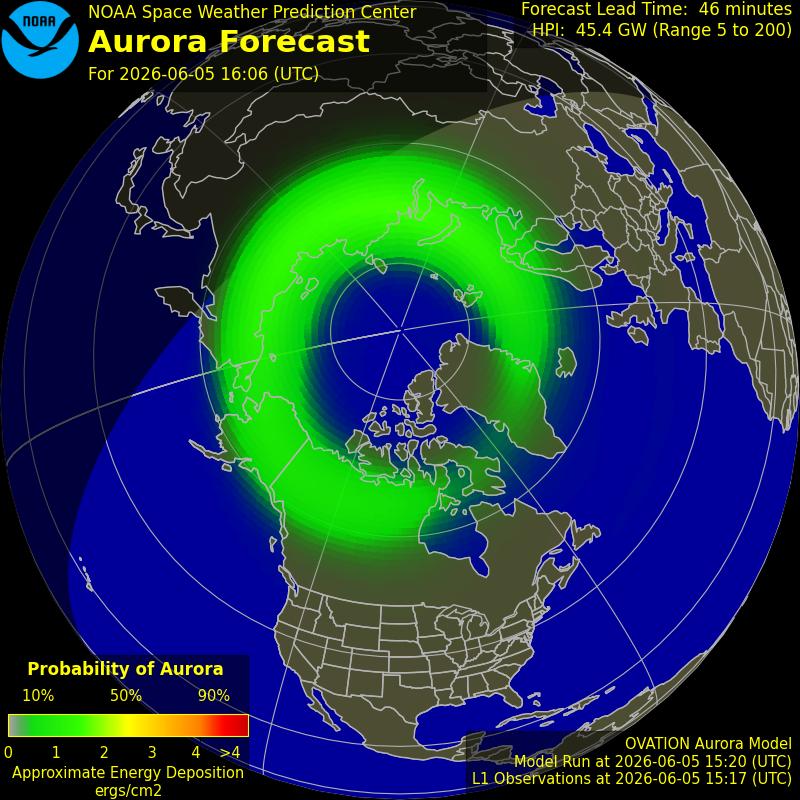
How to use this data:
If you're excited to witness the awe-inspiring Northern Lights in British Columbia, our tool acts as a valuable resource to predict aurora appearances. We gather live satellite data and present it in a user-friendly dashboard, meticulously filtering out extraneous information. While deciphering the data might seem intricate, our comprehensive “how-to” guide ensures a seamless understanding.
Capitalizing on the Long-Range Forecast:
Elevate your aurora-chasing expedition by utilizing our extended forecast feature. With this tool, you can meticulously plan your outings well in advance, granting ample time to prepare for the mesmerizing Northern Lights spectacle. And there's more – we provide real-time minute-to-minute insights for an immersive and personalized experience like never before.
Where are the Best Places to See the Northern Lights in British Columbia?
British Columbia offers a range of breathtaking spots where you can marvel at the Northern Lights. Here are some prime locations across the province that provide excellent vantage points for observing this celestial phenomenon:
- Northern Rockies: Journey to the northern reaches of British Columbia for expansive skies and minimal light pollution, making it an ideal location to catch the Northern Lights.
- Vancouver Island: Escape to the western coast of Vancouver Island for a chance to witness the auroras against the backdrop of the Pacific Ocean. Note: Stronger data may be needed to see the auroras on Vancouver Island.
- Prince George: Positioned in the central part of the province, Prince George offers opportunities to experience the Northern Lights dancing above its picturesque landscapes.
- Smithers: Nestled in the Bulkley Valley, Smithers provides a tranquil environment for observing the auroras with minimal interference from city lights.
- Tumbler Ridge: Venture to this remote area in northeastern British Columbia for clearer skies and an increased likelihood of catching the captivating light show.
- Stuart Lake: Located in the northern part of the province, Stuart Lake offers a serene setting to witness the Northern Lights over the calm waters.
- Yoho National Park: Explore the Rocky Mountains in Yoho National Park for the chance to observe the auroras against the backdrop of stunning mountain scenery.
- Haida Gwaii: Head to this remote archipelago off the northern coast of British Columbia to witness the Northern Lights in a unique coastal setting.
Remember, the Northern Lights are a natural phenomenon influenced by solar activity and weather conditions. To optimize your chances of experiencing this celestial spectacle, choose clear nights, venture away from city lights, and keep an eye on real-time aurora forecasts for potential opportunities to witness the breathtaking Northern Lights in the diverse landscapes of British Columbia.
When Can You See the Northern Lights in British Columbia?
For the best chances of experiencing this natural phenomenon, plan your aurora-chasing outings on clear nights, away from bright city lights. Keep in mind that while the auroras can appear at any time after dark, the window of opportunity is usually from around 11:00 PM to 3:00 AM. However, during nights of heightened auroral activity, the Northern Lights might make an appearance earlier, offering an awe-inspiring display that adds an extraordinary touch to the British Columbia night skies.
What is the Best Time of Year for Aurora Borealis viewing in British Columbia?
The fall, winter, and early spring months, from September to April, present the best opportunity to witness the enchanting Aurora Borealis in British Columbia. These seasons offer longer nights and darker skies, creating optimal conditions for observing the breathtaking display of the Northern Lights.
The increased sightings during fall and winter are largely attributed to the extended darkness, which enhances the visibility of the auroras. However, it's important to note that the Northern Lights can grace the skies throughout the year. While they are generally more prevalent during the colder months, with heightened solar activity and geomagnetic storms, the Aurora Borealis can surprise observers during any season.
To maximize your chances of witnessing this captivating natural phenomenon, select clear nights, find locations away from urban light pollution, and stay updated with real-time aurora forecasts. Whether it's the longer nights of fall and winter or the potential surprises of other seasons, the Aurora Borealis offers a spectacular show in the diverse landscapes of British Columbia.
Can You See the Northern Lights in British Columbia Tonight?
The possibility of witnessing the Northern Lights in British Columbia tonight depends on various factors, including solar activity and current geomagnetic conditions. To get the most accurate updates, closely monitor real-time aurora forecasts on our website and app, and stay tuned to the incoming data. If the specified criteria align, there is a good chance of experiencing the awe-inspiring Northern Lights illuminating the British Columbia night sky.
How long do the Northern Lights usually last?
The duration of the Northern Lights, scientifically known as the aurora borealis, can vary. On average, a single display of the Northern Lights may last anywhere from a few minutes to several hours. However, during periods of heightened solar activity and favorable conditions, the auroras can persist for several hours, painting the night sky with an enchanting and mesmerizing spectacle. The exact duration of the auroras depends on factors such as the intensity of the solar storm, atmospheric conditions, and the strength of the aurora display. Keep in mind that while some auroras are brief, others can offer an extended and breathtaking show, adding to the captivating experience of the British Columbia night sky.
What to Expect?
When witnessing the captivating Northern Lights in British Columbia, prepare to be mesmerized by an array of colors gracefully dancing across the night sky. While photographs often capture vivid hues of green, pink, and purple, it's essential to note that the naked eye might perceive a more subtle display. Anticipate the appearance of beautiful white flashes or flickering, which could resemble clouds. For a more vibrant and enchanting experience, consider capturing long exposures with a camera to unveil the true brilliance of the auroras. However, remember that the colors you see with your eyes may not perfectly match the striking tones seen in photographs. The mesmerizing dance of the Northern Lights is a unique and awe-inspiring spectacle that offers an unforgettable experience, regardless of the precise colors you perceive in the British Columbia night sky.