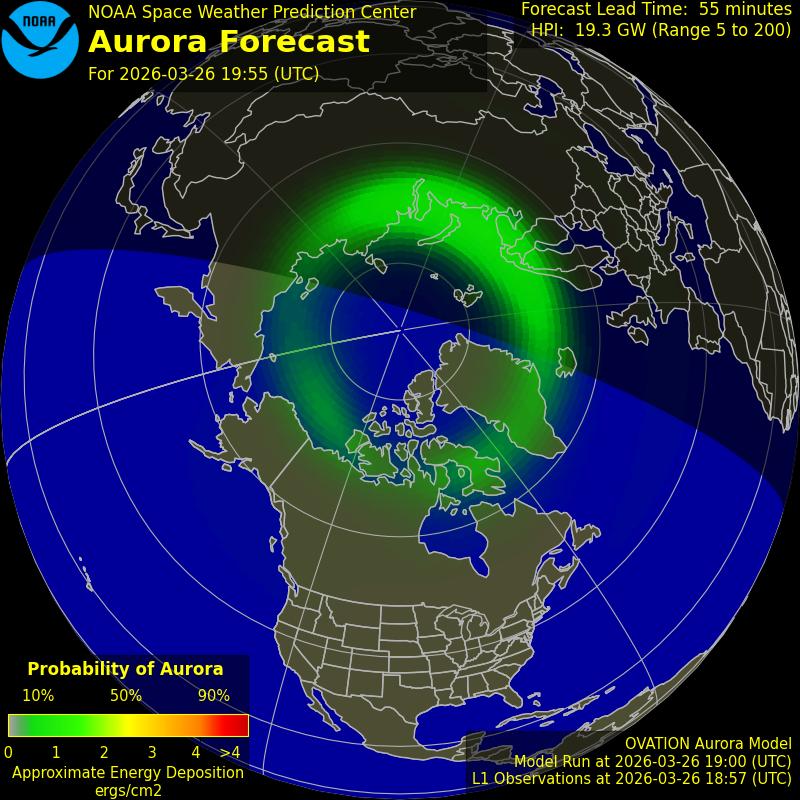
How to make the most of this data in Manitoba:
If you're eager to witness the captivating Northern Lights in Manitoba, our tool serves as a valuable resource to predict aurora appearances. We collect live satellite data and present it in a user-friendly dashboard, carefully filtering out unnecessary information. While interpreting the data might seem complex, our comprehensive “how-to” guide ensures a smooth understanding.
Enhancing your aurora-chasing adventure in Manitoba:
Leverage our extended forecast feature to elevate your aurora-chasing adventure. With this tool, you can meticulously plan your outings well in advance, providing ample time to prepare for the mesmerizing Northern Lights spectacle. What's more, we offer real-time minute-to-minute insights for an immersive and personalized experience like never before.
Where are the Best Places to See the Northern Lights in Manitoba?
Manitoba offers a range of breathtaking spots where you can marvel at the Northern Lights. Here are some prime locations across the province that provide excellent vantage points for observing this celestial phenomenon:
- Churchill: Known as the “Polar Bear Capital of the World,” Churchill offers an excellent vantage point for observing the Northern Lights. Its remote location, coupled with minimal light pollution, makes it a prime spot for witnessing the auroras.
- Whiteshell Provincial Park: This park's serene landscapes and relatively low light pollution provide a fantastic backdrop for Northern Lights viewing. Its lakes and forests create a picturesque setting to enjoy the celestial spectacle.
- Spruce Woods Provincial Park: With its vast prairies and unique landscapes, Spruce Woods offers unobstructed views of the night sky. The park hosts various stargazing events, making it a popular destination for both casual observers and enthusiasts.
- Grand Beach: This beautiful beach on the shores of Lake Winnipeg becomes an ideal location for Northern Lights viewing during clear nights. The expansive horizon over the lake enhances the chances of witnessing the auroras.
- Clear Lake: Found within Riding Mountain National Park, Clear Lake offers clear skies and minimal light pollution. Visitors can combine their Northern Lights experience with other outdoor activities available in the park.
- Lake Manitoba: Its wide open spaces and tranquil waters provide a peaceful setting for observing the auroras. Lake Manitoba's surroundings allow for uninterrupted views of the Northern Lights.
- Falcon Lake: Another spot within Whiteshell Provincial Park, Falcon Lake's calm waters and lush landscapes make it a great choice for both camping and Northern Lights watching.
- Pisew Falls Provincial Park: Located in the northeast, this park's remote location enhances the visibility of the Northern Lights. Its dense forests and tranquil atmosphere create a unique viewing experience.
- Morden: Situated in southern Manitoba, Morden offers relatively dark skies and a welcoming community of stargazers. The Canadian Fossil Discovery Centre adds to the area's attractions.
- Birds Hill Provincial Park: Just outside Winnipeg, this park provides a convenient escape from the city lights. Its open spaces and natural beauty set the stage for a memorable Northern Lights adventure.
These popular places in Manitoba offer varying landscapes and atmospheres for observing the Northern Lights, allowing residents and visitors alike to experience the magic of the auroras.
When Can You See the Northern Lights in Manitoba?
To maximize your odds of witnessing this incredible natural phenomenon, schedule your aurora-chasing escapades on clear nights, far from the glow of urban lights. While the auroras can materialize after sunset, the prime viewing hours generally span from approximately 11:00 PM to 3:00 AM. Nonetheless, during periods of intensified auroral activity, the Northern Lights may grace the skies earlier, presenting a breathtaking spectacle that enhances the allure of the night skies.
What is the Best Time of Year to see the Northern Lights in Manitoba?
The best time to witness the enchanting Northern Lights in Manitoba is during the fall, winter, and early spring months, from September to April. These seasons provide longer nights and darker skies, ideal for observing the awe-inspiring auroras. Keep in mind that the visibility of the Northern Lights heavily depends on the sun's activity and Manitoba's location, which is partly within the subarctic circle, enhancing the chances of witnessing this captivating natural phenomenon.
Can You See the Northern Lights in Manitoba Tonight?
The possibility of witnessing the Northern Lights in Manitoba tonight depends on various factors, including solar activity and current geomagnetic conditions. Keep a close watch on real-time aurora forecasts, such as Aurora Admin, to stay updated on the incoming data. If the specified criteria align, there is a good chance of experiencing the mesmerizing Northern Lights illuminating the Manitoba night sky.
How long do the Northern Lights usually last?
The duration of the Northern Lights, scientifically known as the aurora borealis, can vary. On average, a single display of the Northern Lights may last anywhere from a few minutes to several hours. In Manitoba, due to its favorable geographical location and lower strength requirements, you may experience longer periods of viewing. The exact duration of the auroras depends on factors such as solar activity, atmospheric conditions, and the strength of the aurora display. Some auroras offer brief but spectacular shows, while others can provide an extended and breathtaking experience, enhancing the captivating Manitoba night sky.
What to Expect?
When viewing the mesmerizing Northern Lights, anticipate being entranced by a stunning display of colors gracefully dancing across the night sky. While photographs often depict vibrant hues of green, pink, and purple, it's important to note that the naked eye might perceive a more subtle presentation. You might witness beautiful white flashes or flickering lights, which can sometimes resemble clouds. For a more vibrant and enchanting experience, capturing long-exposure photographs can reveal the true brilliance of the auroras. However, keep in mind that the colors you see with your eyes may not perfectly match the striking tones seen in photographs due to camera sensors' sensitivity. The Northern Lights offer a unique and awe-inspiring spectacle, creating an unforgettable experience under the Manitoba night sky.