
Northern Lights Forecast for Calgary

announcementThis is an research tool to help predict the Northern Lights in Calgary. We use raw satellite data and put it into an easy to use dashboard.
Loading aurora probability...

Substorm

Substorm Phase: Quiet; Aurora Activity Score: 12/100

This feature is experimental. We are actively working to improve the Substorm feature.
Last Quarter 70.4% illuminated
31
Power North (GW) Measures the total energy fueling the aurora in this hemisphere. Higher values mean a stronger, more visible aurora that can be seen closer to the equator (or further from the poles).
-2.67
BZ The north-south direction of the sun's magnetic field. A negative (southward) Bz is crucial for connecting with Earth's field and boosting aurora activity.
4.19
BT The overall strength of the sun's magnetic field. A stronger Bt can indicate more energetic solar wind, which can contribute to aurora intensity, especially when Bz is favorable.
404
Wind Speed (km/s) The speed of particles flowing from the sun. Faster solar wind delivers more energy to Earth's magnetic field, increasing aurora potential.
1.26
Density (p/cm³) The concentration of particles in the solar wind. Higher density means more particles impacting Earth's magnetic field, which can intensify auroras.
1.0
KP A global index (0-9) measuring Earth's geomagnetic activity. While historically used, Kp is a less precise indicator for real-time aurora visibility compared to other factors. Higher Kp values *can* suggest stronger disturbances, but it's not the sole or most reliable predictor.
Ideal Conditions for Northern Lights in Calgary:

Power: +45 Gw | Bz: -2.5 | Wind Speed: 400+ | Density: 4+ | Kp: 4+ (minimum 2)

Auroras have been known to show in Calgary with less data, however we are trying to give the best Aurora viewing experience so we aim to have stronger aurora requirements.

Don’t Miss the Magic!

Stay ahead of the Northern Lights with real-time alerts. Subscribe now to receive a text or call whenever the aurora is active—so you never miss a moment of the show.

Book Aurora Tours

See the auroras with a professional tour guide.

How to use this data:

If you're eager to witness the northern lights in Calgary, this tool can serve as a valuable source for predicting aurora occurrences. We collect live satellite data and present it in a user-friendly dashboard, filtering out unnecessary noise; however, understanding the data may be perplexing. Follow our “how to” guide for detailed information.

Leverage our long-range forecast to plan your aurora-chasing adventure well in advance, and complement it with more localized minute-to-minute insights for an enhanced experience.

Where to see the northern lights in Calgary?

The best places to see the northern lights in Calgary include locations away from the city lights, such as Ghost Lake Parking Lot, Bragg Creek, Kananaskis Country, and Banff National Park, where darker skies enhance the chances of witnessing the mesmerizing auroras.

When can you see northern lights in Calgary?

Usually after dark around 11:00 PM to 3 AM the next morning. On very strong nights the northern lights have been able to be seen much earlier.

When is the best time of year to see the aurora borealis in Calgary?

The best time of year to see the aurora borealis in Calgary is typically during the winter months, from September to April, when the nights are longer and the skies are darker, providing optimal conditions for observing the mesmerizing northern lights.

Can you see the northern lights in Calgary tonight?

Whether you can see the northern lights in Calgary tonight depends on the incoming data. To get the most accurate updates, monitor Aurora Admin closely and track the incoming data. If the specified criteria are met, there is a good chance of witnessing the aurora borealis.

How long do the Northern Lights usually last?

The duration of the Northern Lights, also known as the aurora borealis, can vary. On average, a single display of the Northern Lights may last anywhere from a few minutes to several hours. However, during periods of heightened solar activity and favorable conditions, the auroras can persist for several hours, providing a mesmerizing spectacle in the night sky. The exact duration of the auroras depends on factors such as the intensity of the solar storm, atmospheric conditions, and the strength of the aurora display. Keep in mind that while some auroras are brief, others can offer an extended and breathtaking show.

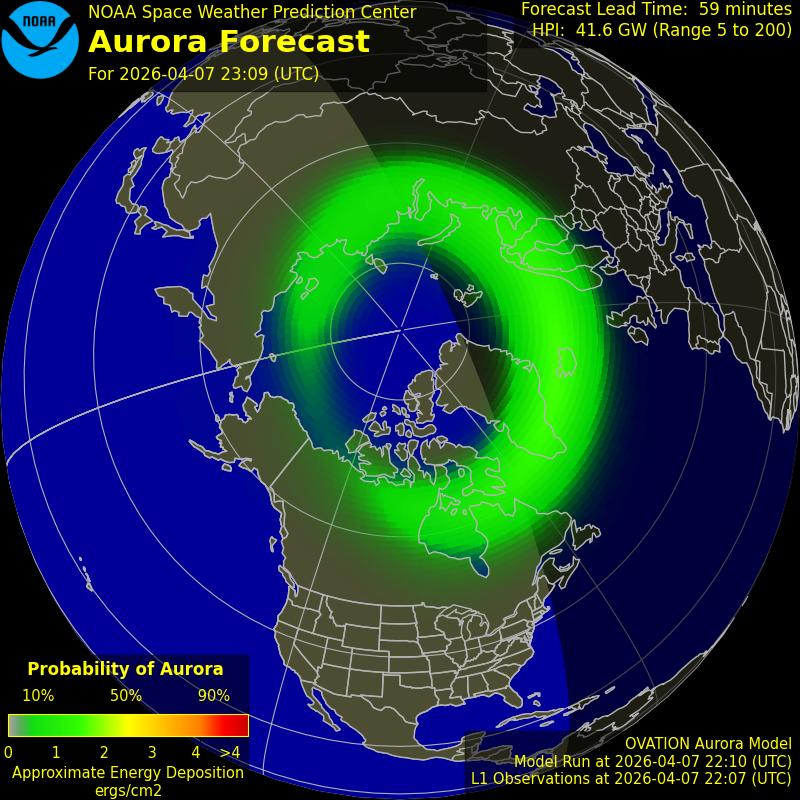
Aurora Oval

Northern Hemisphere

Aurora Oval Northern Hemisphere