
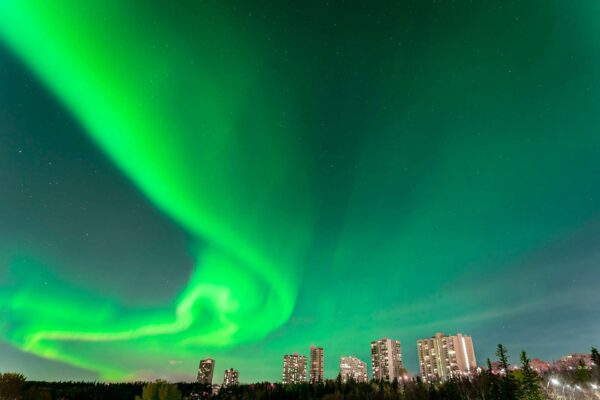
You don't need a telescope to catch this one.
The sun let out two strong solar flares close together this week, including a powerful X class flare, and the northern lights could be visible across most of Canada over the next few nights.
That includes many cities and towns in BC, Alberta, Ontario, the Prairies and beyond. A number of mid latitude US states have a shot too, including Washington, Montana, North Dakota, Minnesota, Wisconsin, Michigan, New York and Maine.
The aurora could be visible tonight, July 2, into Friday, July 3, and then again overnight into Saturday, July 4. That puts a real chance of northern lights right in the middle of the long weekend, which is about as good a timing as it gets.
Why the sky is putting on a show this week
The sun has been unusually busy lately. Along with the flares, it also fired off a coronal mass ejection, which is basically a massive cloud of charged particles thrown outward into space. That cloud takes a few days to travel the distance between the sun and Earth, and it's expected to arrive right around now.
When that material reaches us, it interacts with Earth's magnetic field, and that interaction is what creates the aurora in the first place. It shows up as ribbons of green, sometimes pink, sometimes a deeper red, moving slowly across the sky.
A more intense aurora is possible in places like Edmonton, Calgary, Winnipeg, Saskatoon, Regina and other northern cities, along with smaller towns further north like Churchill and Dawson Creek. Southern spots like Vancouver, Toronto and Victoria have a shot too, just a smaller one, since the display tends to fade the further south you go.
The sun goes through an activity cycle that runs roughly eleven years, and right now it's near the busiest stretch of that cycle. That means more flares, more solar storms, and more nights like this one for the next while.
How to actually see it
The aurora doesn't need to be directly overhead for you to see it. A bright display can sometimes be spotted from hundreds of kilometers away from where it's actually happening, so even people outside the most likely viewing zones still have a shot.
Timing matters. The northern lights typically show up a few hours after sunset and tend to get more active later in the night. In northern regions where the sky stays bright late into the evening this time of year, that usually means waiting until closer to 11pm before it's actually dark enough to see anything.
Location matters just as much. Find a spot with little or no light pollution. A dark rural road, a lakeside, a hilltop, or anywhere away from streetlights and city glow will give you a much better shot than a downtown balcony. Give your eyes ten or fifteen minutes to adjust once you're out there.
Once you're settled in, look all around, not just straight north. The aurora can stretch across large parts of the sky, and sometimes the best activity shows up somewhere you weren't expecting.
You don't need a telescope or expensive camera gear. Most modern phones handle low light well enough to pick up color that your eyes might miss at first. If the sky just looks like a faint haze or a strange cloud, try snapping a photo before you assume nothing is happening. A few extra seconds of exposure can reveal a lot more than a quick glance. If you want to get better shots, here's a quick guide to photographing the northern lights with your iPhone.
Dress warmer than you think you need to. Even in July, clear skies overnight can get surprisingly cool, especially away from the city.
Nights like this one are hard to predict more than a few days out, so if you don't want to keep checking the sky yourself, Aurora Admin's alert service will text you when conditions are actually lining up in your area.
Grab a blanket, find some darkness, and look up. Nights like this one don't come around all that often, and this week the sun is giving us a good reason to make the most of it.
